Pharmacological Action
Medetomidine is a potent α2-agonist widely used in many wildlife animals. Medetomidine produces sedative, muscle relaxant and analgesic effects by stimulating α2-receptors that exist pre- and post-synaptically in tissue throughout the body.
Medetomidine stimulates the α2A-adrenoceptor subtypes that regulate the stages of awareness, arousal and vigilance in the brainstem.
Medetomidine induces a dose-dependent decrease in the release and turnover of noradrenaline in the central nervous system (CNS).
Alpha2-adrenoceptor activation by medetomidine hyperpolarises noradrenergic neurons in the CNS, inhibiting the transmission of impulses and causing sedation.
The muscle relaxant effect that accompanies medetomidine-induced sedation is due to inhibition of α2-adrenoceptors at the interneuron level of the spinal cord.
Stimulation of receptors at various sites in the pain pathway within the brain and spinal cord produces an analgesic effect.
Pharmacokinetic and Pharmacodynamic Properties
Medetomidine is rapidly absorbed and distributed. Peak plasma concentrations are reached approximately 30 minutes after IM injection.
Medetomidine is metabolised in the liver and the metabolites are excreted in the urine. The elimination of medetomidine from plasma or serum may differ between species.
Medetomidine has varying effects on the cardiopulmonary system.
In the periphery, medetomidine causes vasoconstriction by activating postsynaptic α2B-adrenoceptor subtypes in the vascular smooth muscle.
An initial increase in blood pressure due to raised systemic vascular resistance may be seen after medetomidine is administered.
This may be followed by a decrease in overall blood pressure due to the baroreceptor reflex and the suppression of cardiac output.
The significant decrease in oxygen delivery following reduced cardiac output may have negative effects on respiration.
Indications
DORMADET 40 is indicated for reversible narcosis with analgesia in wildlife animals.
Controlled clinical trials with DORMADET 40 have only been conducted in blue wildebeest and blesbok.
Contraindications
None recorded.
Warnings
Avoid using DORMADET 40 in wildlife animals that are severely stressed.
Raised endogenous catecholamine levels can interfere with DORMADET 40-induced reductions in excitatory neurotransmitter release, possibly resulting in ineffective sedation.
The safety of DORMADET 40 in pregnant and lactating wildlife animals has not been established.
Although there are no published reports that α2-agonists cause abortion in animals, medicines that stimulate α-adrenoceptors do increase the contractility of the pregnant and non-pregnant uterus.
DORMADET 40 residue studies have not been conducted in wildlife animals.
Carcasses of animals treated with DORMADET 40 within 90 days of slaughter should be discarded and are not considered safe for human or predator consumption.
Dosage and Directions for Use
DORMADET 40 dosing is dependent on species, body mass and the condition of the wildlife animal being treated.
Administration by IM injection is recommended. Refer to the recommended dosage tables below.
Precautions must be taken to reduce stimulation of the wildlife animal once immobilised, for example by blindfolding and ear plugging.
It is recommended that the animal be left for at least 2–3 minutes after becoming recumbent before being approached.
The effects of DORMADET 40 can be reversed by administering ZOOSEDIN 20 (atipamezole HCl) IM at a ratio of 3–5 mg of ZOOSEDIN 20 for every 1 mg of DORMADET 40 used.
Side Effects and Special Precautions for Use
Cardiovascular side effects may include transient hypertension, an increase in vascular resistance during the loading phase, bradycardia and a reduction in cardiac output followed by hypotension.
Mild cyanosis may be observed as a result of a low heart rate, resulting in reduced blood flow through the tissues and increased oxygen extraction.
A decrease in cardiac output may result in diminished oxygen delivery and a disruption of respiration.
Reduced respiratory rates for varying periods have been reported.
Measurement of peripheral oxygen saturation may not be accurate due to the peripheral vasoconstriction caused by DORMADET 40.
DORMADET 40 should be used with caution in young and old wildlife animals.
Care should be taken to keep the animal in the correct recumbence posture to maintain a free air passage.
Should respiratory depression persist, treatment with ZOOSEDIN 20 is recommended.
Prolonged induction periods in stressed animals may lead to poikilothermia and special precautions should be taken if wildlife animals are immobilised in extreme environmental temperatures.
Due to its high concentration, accidental exposure to DORMADET 40 could have serious effects on humans.
Veterinarians are advised to take the following precautions when handling DORMADET 40:
- Do not work with the product when unaccompanied.
- Avoid using the product in devices where the solution is pressurised, for example blowpipes.
- Wear gloves when handling the product.
- Discard used needles in an appropriate sharps container immediately after use.
- In the event of topical exposure, rinse the affected area with copious amounts of water and monitor for signs of toxicity.
- Should accidental injection occur, administer the antidote and seek medical attention immediately.
- Inject 0,6 mg/kg atipamezole IM or 0,3 mg/kg atipamezole IV if the victim is symptomatic but awake.
- If the victim is unconscious, inject 100 mg atipamezole IM immediately. Repeat once if not effective.
- Monitor the airways and initiate CPR if needed.
Known Symptoms of Overdosage and Particulars of Its Treatment
Symptoms of DORMADET 40 toxicity in wildlife animals include respiratory depression and/or severe cardiovascular changes.
Should cardiorespiratory function not sufficiently recover, small increments of ZOOSEDIN 20 may be administered.
Oxygen supplementation is recommended in cases of severe respiratory depression.
Identification
A clear, colourless solution free from visible particulates.
Presentation
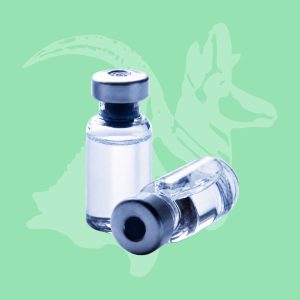
DORMADET 40 is supplied in a 10 ml amber glass vial with a grey rubber stopper and a white plastic cap.
Each vial is contained in an outer carton.
Storage Instructions
Store at or below 25 °C.
Protect from light.
KEEP OUT OF REACH OF CHILDREN AND UNINFORMED PERSONS.
Registration Number
19/1.4.2/08
Holder of the Certificate of Registration
Wildlife Pharmaceuticals (Pty) Ltd
38 Wilken Street
Rocky Drift
White River
1240
South Africa
Date of Publication
25 June 2024
Recommended DORMADET 40 Doses
The following recommendations are based on literature and field efficacy data.
Ungulates
| Species | Mass (kg) | Dose ¥/ɸ (µg/kg) | Used in Combination With |
|---|
| Addax | 29,5–117 | 58 | 1,22 mg/kg ketamine |
| Buffalo | 400–900 | 4–5 | 4–5 µg/kg thiafentanil |
| Bushbuck | 40 | 75 | 25 µg/kg thiafentanil AND 0,5 mg/kg azaperone |
| Eland | 460–700 | 30 | 30 µg/kg thiafentanil |
| Thomson’s gazelle | 11,5–20 | 40 | 5 mg/kg ketamine AND 0,4 mg/kg butorphanol |
| Gemsbok | 220–240 | 8–9 | 25 µg/kg thiafentanil |
| Giraffe | 600–1000 | 16 | 6,6 µg/kg thiafentanil AND 0,5 mg/kg ketamine |
| Lichtenstein’s hartebeest | 138–245 | 5–10 | 11–26 µg/kg thiafentanil AND 0,7–1,4 mg/kg ketamine |
| Red hartebeest | 120–150 | 40 | 30 µg/kg thiafentanil |
| Hippopotamus | 900–2000 | 60–80 | 1 mg/kg ketamine |
| Nubian ibex | 40–50 | 150 | 0,15 mg/kg butorphanol AND 0,15 mg/kg midazolam |
| Impala | 38–40 | 50–60 | 50–75 µg/kg thiafentanil |
| Kudu | 180 | 40 | 40 µg/kg thiafentanil |
| Lechwe | 95–120 | 50 | 80 µg/kg thiafentanil |
| Nyala | 50–100 | 50–70 | 60–80 µg/kg thiafentanil |
| Arabian oryx | 91–105 | 5 | 40 µg/kg etorphine |
| Reedbuck | 50–70 | 40 | 30–40 µg/kg thiafentanil |
| White rhino | 960–1300 | 5–20 | 2 µg/kg etorphine AND 20 µg/kg butorphanol IV |
| Roan antelope | 90–275 | 5–21 | 10–30 µg/kg thiafentanil AND 0,29–1,11 mg/kg ketamine |
| Sable | 220–240 | 9–13 | 30 µg/kg thiafentanil |
| Springbok | 35–40 | 30 | 15–25 µg/kg thiafentanil |
| Tsessebe | 120–140 | 35–40 | 30 µg/kg thiafentanil |
| Waterbuck | 200–250 | 20 | 25–30 µg/kg thiafentanil |
| Black wildebeest | 120–170 | 25–30 | 25 µg/kg thiafentanil |
| Blue wildebeest | 180–270 | 20–30 | 20 µg/kg thiafentanil |
| Mountain zebra | 250 | 20 | 0,1 mg/kg butorphanol — standing sedation |
| Plains zebra | 250 | 8 | 12 µg/kg butorphanol AND 40 µg/kg midazolam |
Predators
| Species | Mass (kg) | Dose ¥/ɸ (µg/kg) | Used in Combination With |
|---|
| Cheetahs | 35–55 | 150 | 0,2 mg/kg butorphanol AND 0,03 mg/kg midazolam |
| Hyena | 30 | 100 | 0,8 mg/kg butorphanol AND 0,5 mg/kg midazolam |
| Leopard | 35–90 | 60 | 0,3 mg/kg butorphanol AND 0,2 mg/kg midazolam |
| African lion | 81–210 | 50 | 0,3 mg/kg butorphanol AND 0,2 mg/kg midazolam |
| Serval | 10–13 | 80 | 0,4 mg/kg butorphanol AND 0,3 mg/kg midazolam |
| African wild dog | 20–30 | 100 | 5 mg/kg ketamine |
Other Species
| Species | Mass (kg) | Dose ¥/ɸ (µg/kg) | Used in Combination With |
|---|
| Aardvark | 33–45 | 100 | 3,8 mg/kg ketamine AND 0,25 mg/kg midazolam |
| Chimpanzee | 30–60 | 40–50 | 5 mg/kg ketamine AND 0,05 mg/kg midazolam |
| African elephants | 1600–5800 | 9 | 30 µg/kg butorphanol — standing sedation |
| Gorilla | 63–155 | 40 | 5 mg/kg ketamine AND 0,05 mg/kg midazolam |
| Cape ground squirrel | 618–632 g | 50 | 15 mg/kg ketamine |
Dosage Table Notes
¥ Higher dose range recommended for nervous or excited animals, or immobilisation where a short induction period is needed.
ɸ Lower dose range recommended for weak, sick, debilitated or tame animals, or immobilisation where longer induction times are allowable, and/or for animals in captivity or where movement is restricted, for example in zoos.