
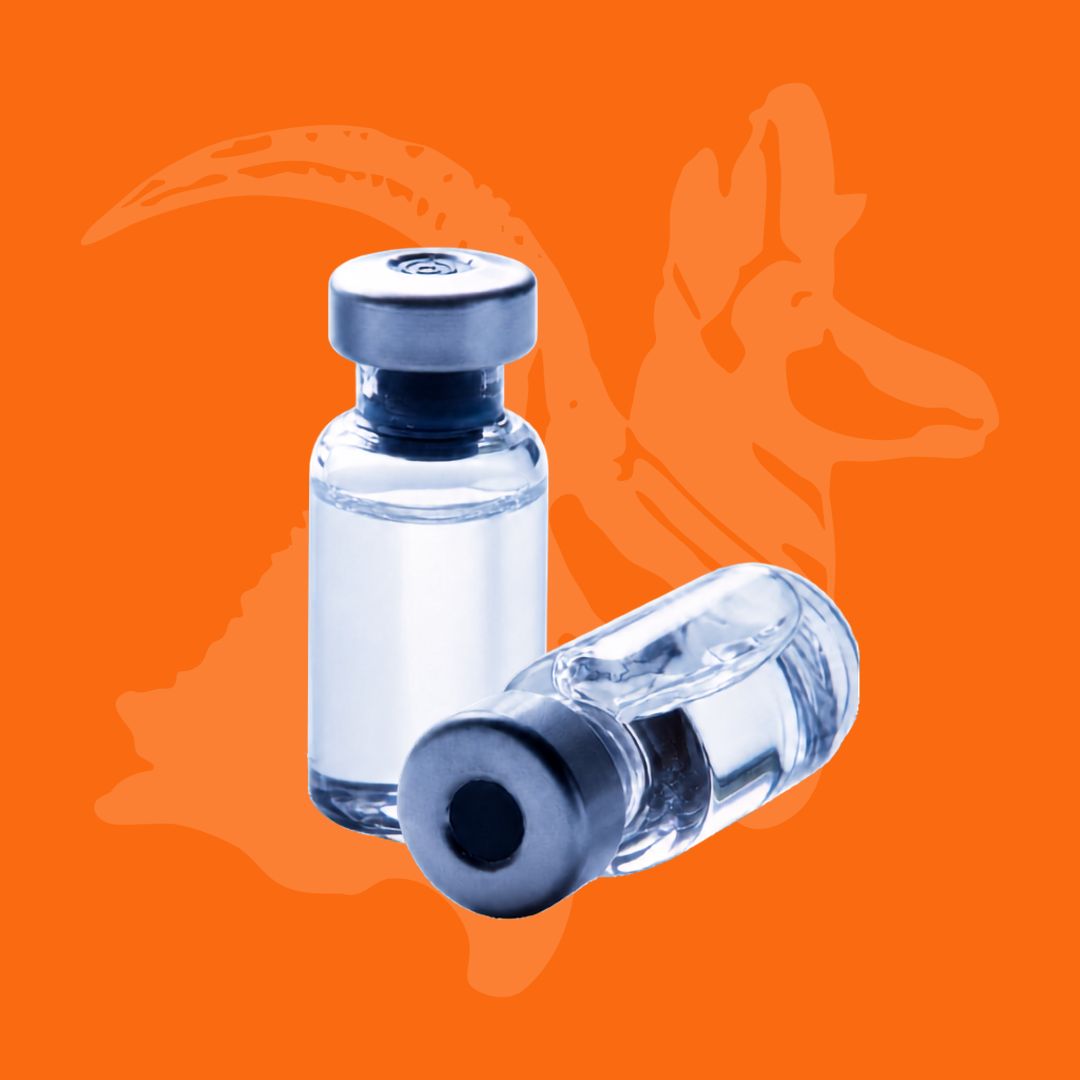
Thianil/Trexonil Combipack
Thiafentanil oxalate 10 mg/ml (10 ml vial) with naltrexone HCl 50 mg/ml (20 ml vial)
Veterinary Medicine
Scheduling Status: S6
Proprietary Name and Dosage Form
THIANIL INJECTION
Composition
Each ml contains:
- Thiafentanil oxalate 10 mg
- Preservative: Methylparaben 0,1% m/v
Category and Class of Medicine
C 1.3.1 Opioid agonist
Pharmacological Action
Thiafentanil oxalate is a pure opioid agonist that produces analgesia, immobilisation and profound anaesthesia in wildlife animals.
It is a synthetic analogue of fentanyl and has selective affinity for the µ-opioid receptors found throughout the central nervous system.
When thiafentanil is used alone in wildlife animals, the anaesthesia produced is characterised by extensive muscle rigidity, typical of opioid anaesthesia in most large ungulates.
Thiafentanil is fully reversed by naltrexone hydrochloride, which competitively binds to and displaces thiafentanil from the opioid receptors.
Pharmacokinetic and Pharmacodynamic Properties
Thiafentanil is lipid soluble and rapidly absorbed and metabolised following intramuscular injection.
It has a rapid onset of action and a relatively short duration of action.
Indications
THIANIL is indicated for reversible narcosis with analgesia in wildlife animals.
Contraindications
THIANIL is contraindicated in felid species and non-domestic equids, specifically Burchell’s zebra (Equus quagga burchellii).
Warnings
The safety of THIANIL during pregnancy and lactation has been proved in buffalo.
The safety of THIANIL in other pregnant and lactating wildlife animals has not been established. There is a risk of respiratory depression in the newborn animal if THIANIL is given to a parturient animal.
THIANIL residue studies have not been conducted in wildlife animals and consequently, carcasses from animals treated with THIANIL should not be used for human or predator consumption.
A withdrawal period of at least 3 months is required.
Dosage and Directions for Use
THIANIL dosing is dependent on species, body mass and the condition of the wildlife animal being treated.
Administration by intravenous or intramuscular injection is recommended. Refer to the recommended dosage table below.
The effects of THIANIL can be reversed by administering TREXONIL (naltrexone hydrochloride) at a ratio of 10 mg of TREXONIL for every 1 mg of THIANIL used.
Personnel should retreat sufficiently prior to reversal of THIANIL, as animals may rise in as little as 30 seconds after intravenous administration of TREXONIL.
Side Effects and Special Precautions for Use
Wildlife animals treated with THIANIL may show signs of excitement, tachycardia or tachypnoea, bradycardia or bradypnoea, hypertension or hypotension, cyanosis, poikilothermia and reaction to sudden noise.
Respiratory depression is particularly problematic in ungulate species immobilised with THIANIL. Possible increased appendicular and abdominal muscle rigidity may further hinder respiration.
Precautionary measures, including oxygen supplementation, should be taken to alleviate respiratory depression.
Precautionary steps must be taken to prevent the effects of extreme environmental temperatures on anaesthetised animals.
The use of THIANIL in elderly animals and animals with compromised health carries an additional degree of risk.
Accidental exposure to THIANIL could have serious effects on humans due to the high concentration of the medicine.
The following precautions should be taken by veterinarians when using THIANIL:
- Do not work with THIANIL when unaccompanied.
- Wear gloves when handling THIANIL. Ensure water or an appropriate irrigation solution is available to treat accidental exposure of the skin or eyes.
- Ensure that the antidote, naloxone, and a needle and syringe for administration of the antidote are readily available.
- An assistant capable of administering the antidote to humans should be present at all times and fully briefed on the procedure to follow in the event of accidental exposure.
- Once the required dose of THIANIL has been withdrawn from the vial, immediately discard the needle into a closed container or sharps bin.
- THIANIL should not be used in blowpipes or similar devices where the medicine solution is pressurised.
- Symptoms of toxicity in humans include dizziness, nausea, pinpoint pupils, cyanosis, respiratory depression, hypotension, loss of consciousness and cardiac arrest.
- In the event of accidental topical exposure of the skin or eyes, wash the affected area immediately with copious amounts of water to prevent absorption. Monitor for symptoms of toxicity.
- Should accidental injection occur, seek medical attention immediately. Inject the antidote intramuscularly or intravenously and repeat at 2–3 minute intervals until symptoms are reversed. Monitor airway and ventilation and initiate CPR as necessary until medical help arrives.
Known Symptoms of Overdosage and Particulars of Its Treatment
Symptoms of toxicity in wildlife animals include respiratory depression and/or severe cardiovascular changes.
Should respiratory function not recover sufficiently, TREXONIL or small increments of BUTADYNE 50 (butorphanol tartrate) can be administered.
Oxygen supplementation is recommended in the case of severe respiratory depression.
Identification
A clear, colourless solution free from visible particulate matter.
Presentation
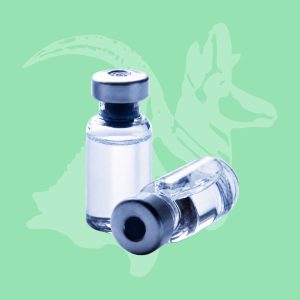
THIANIL is supplied in a clear 10 ml vial with a grey rubber stopper and a white plastic cap.
Storage Instructions
Store at or below 25 °C.
Protect from light.
KEEP OUT OF REACH OF CHILDREN AND UNINFORMED PERSONS.
Registration Number
06/1.3/06
Holder of the Certificate of Registration
Wildlife Pharmaceuticals (Pty) Ltd
38 Wilken Street
Rocky Drift
White River
1240
South Africa
Date of Publication
22 September 2021
Recommended THIANIL Doses
Recommended THIANIL doses, alone or in combination with other medicines, based on literature and field efficacy data.
| Species | Mass (kg) | Dose (µg/kg) ɸ ¥ | Used in Combination With |
|---|---|---|---|
| African buffalo (Syncerus caffer) | 300 – 900 | 7 – 10 | 0,03 – 0,1 mg/kg azaperone |
| African buffalo (Syncerus caffer) | 800 – 850 | 10 | 0,02 – 0,06 mg/kg midazolam |
| African buffalo (Syncerus caffer) | 500 – 750 | 10 | 3 – 7 µg/kg medetomidine |
| African elephant (Loxodonta africana) | 4000 | 3 | 0,005 mg/kg azaperone |
| Black wildebeest (Connochaetes gnou) | 110-180 | 20 | 0,1 mg/kg midazolam |
| Blesbok (Damaliscus pygargus phillipsi) | 50 – 70 | 50 | 0,3 mg/kg azaperone |
| Blesbok (Damaliscus pygargus phillipsi) | 18 – 60 | 30 – 60 | 0,1 – 0,3 mg/kg midazolam |
| Blue wildebeest (Connochaetes taurinus) | 180 – 240 | 10 – 20 | 0,2 – 0,4 mg/kg azaperone |
| Blue wildebeest (Connochaetes taurinus) | 180 – 220 | 10 – 20 | 0,03 – 0,05 mg/kg midazolam |
| Bontebok (Damaliscus pygargus) | 45 – 60 | 50 – 80 | 0,08 – 0,1 mg/kg midazolam |
| Bontebok (Damaliscus pygargus) | 50 – 70 | 40 – 60 | 0,4 – 0,5 mg/kg azaperone |
| Bushbuck (Tragelaphus scriptus) | 40 – 50 | 30 – 40 | 1 – 1,2 mg/kg azaperone |
| Bushbuck (Tragelaphus scriptus) | 20 | 80 | 0,1 – 0,25 mg/kg midazolam |
| Common duiker (Sylvicapra grimmia) | 15 – 21 | 30 – 50 | 1 – 1,5 mg/kg azaperone |
| Eland (Taurotragus oryx) | 450 – 700 | 20 – 30 | 0,3 mg/kg azaperone |
| Eland (Taurotragus oryx) | 800 | 20 | 8 – 10 µg/kg medetomidine |
| Eland (Taurotragus oryx) | 400 – 650 | 20 | 0,03 – 0,05 mg/kg midazolam |
| Eland (Taurotragus oryx) | 50 – 150 (juveniles) | 70 | 0,1 – 0,2 mg/kg midazolam |
| Gemsbok (Oryx gazella) | 100 – 250 | 30 – 40 | 0,4 – 0,5 mg/kg azaperone |
| Gemsbok (Oryx gazella) | 100 – 250 | 20 – 40 | 0,08 – 0,2 mg/kg midazolam |
| Gemsbok (Oryx gazella) | 100 – 250 | 20 – 30 | 8 – 10 µg/kg medetomidine |
| Giraffe (Giraffa giraffa) | 700 – 1400 | 10 | |
| Giraffe (Giraffa giraffa) | 700 – 1400 | 6 – 10 | 0,013 – 0,016 mg/kg medetomidine AND AND 0,4 – 0,65 mg/kg ketamine |
| Hartmann’s mountain zebra (Equus zebra hartmannae) | 160 – 300 | 20 – 30 | 0,15 – 0,25 mg/kg midazolam |
| Impala (Aepyceros melampus) | 40 – 60 | 50 – 80 | |
| Impala (Aepyceros melampus) | 40 – 60 | 30 – 80 | 0,5 – 1 mg/kg azaperone |
| Impala (Aepyceros melampus) | 40 – 60 | 30 – 40 | 0,1 – 0,2 mg/kg midazolam |
| Impala (Aepyceros melampus) | 40 – 60 | 30 – 50 | 0,05 – 0,06 mg/kg medetomidine |
| Impala (Aepyceros melampus) | 15 – 25 (sub-adults) | 30 – 80 | 0,2 – 0,7 mg/kg midazolam |
| Klipspringer (Oreotragus oreotragus) | 9 – 12 | 60 | 1,1 – 2,5 mg/kg azaperone |
| Kudu (Tragelaphus strepsiceros) | 100 – 260 | 30 – 40 | 0,3 – 0,8 mg/kg azaperone |
| Kudu (Tragelaphus strepsiceros) | 100 – 260 | 30 – 70 | 0,02 – 0,04 mg/kg medetomidine |
| Kudu (Tragelaphus strepsiceros) | 100 – 260 | 40 – 50 | 0,03 mg/kg medetomidine AND AND 0,5 mg/kg ketamine |
| Kudu (Tragelaphus strepsiceros) | 100 – 260 | 40 – 70 | 0,1 – 0,25 mg/kg midazolam |
| Lechwe (Kobus leche) | 80 – 120 | 80 – 90 | 0,7 – 0,9 mg/kg azaperone |
| Lechwe (Kobus leche) | 80 – 120 | 40 – 50 | 0,25 – 0,3 mg/kg midazolam |
| Lichtenstein hartebeest (Alcelaphus lichtensteini) | 138 – 245 | 11 – 26 | 5 – 10 µg/kg medetomidine AND AND 0,7 – 1,7 mg/kg ketamine |
| Lichtenstein hartebeest (Alcelaphus lichtensteini) | 150 – 200 | 25 | 0,4 – 0,5 mg/kg azaperone |
| Lichtenstein hartebeest (Alcelaphus lichtensteini) | 150 – 200 | 25 | 0,03 mg/kg medetomidine |
| Nyala (Tragelaphus angasi) | 25 – 108 | 40 – 80 | 20 – 80 µg/kg medetomidine AND AND 40 – 200 mg ketamine |
| Nyala (Tragelaphus angasi) | 25 – 108 | 60 – 80 | 0,1 – 0,6 mg/kg midazolam |
| Nyala (Tragelaphus angasi) | 25 – 108 | 60 – 80 | 0,05 – 0,06 mg/kg medetomidine |
| Nyala (Tragelaphus angasi) | 25 – 108 | 60 – 80 | 0,6 – 0,8 mg/kg azaperone |
| Oribi (Ourebi ourebi) | 7 – 15 | 70 | 1,5 – 2,5 mg/kg azaperone |
| Red hartebeest (Alcelaphus buselaphus) | 120 – 150 | 30 – 40 | 0,5 mg/kg azaperone |
| Red hartebeest (Alcelaphus buselaphus) | 120 – 150 | 30 – 40 | 0,04 mg/kg medetomidine |
| Reedbuck (Redunca arundinum) | 50 – 70 | 30 – 40 | 0,6 – 0,8 mg/kg azaperone |
| Roan antelope (Hippotragus equinus) | 80 – 350 | 10 – 40 | 0,06 – 0,3 mg/kg midazolam |
| Roan antelope (Hippotragus equinus) | 80 – 350 | 10 – 13 | 5 – 6 µg/kg medetomidine AND AND 0,3 – 0,6 mg/kg ketamine |
| Sable antelope (Hippotragus niger) | 50 – 280 | 10 – 40 | 0,05 – 0,4 mg/kg midazolam |
| Sable antelope (Hippotragus niger) | 50 – 200 | 20 – 30 | 0,2 – 0,4 mg/kg azaperone |
| Sable antelope (Hippotragus niger) | 250 | 20 | 0,04 mg/kg midazolam AND AND 0,16 mg/kg ketamine |
| Sable antelope (Hippotragus niger) | 15 – 25 (juveniles) | 20 – 40 | 0,15 – 0,3 mg/kg midazolam |
| Springbok (Antidorcas marsupialis) | 35 – 40 | 30 | 0,5 mg/kg azaperone |
| Springbok (Antidorcas marsupialis) | 25 – 30 | 30 – 40 | 0,25 mg/kg midazolam |
| Steenbok (Raphicerus campestris) | 10 – 12 | 40 – 50 | 1 mg/kg azaperone |
| Tsessebe (Damaliscus lunatus lunatus) | 140 | 20 | 0,04 mg/kg midazolam AND AND 0,2 mg/kg ketamine |
| Tsessebe (Damaliscus lunatus lunatus) | 126 – 140 | 30 | 0,04 mg/kg medetomidine |
| Tsessebe (Damaliscus lunatus lunatus) | 126 – 140 | 30 | 0,6 mg/kg azaperone |
| Waterbuck (Kobus ellipsiprymnus) | 200 – 250 | 20 – 30 | 0,02 mg/kg medetomidine |
| Waterbuck (Kobus ellipsiprymnus) | 220 | 30 | 0,2 mg/kg azaperone AND AND 0,9 mg/kg ketamine |
Dosage Table Notes
ɸ Higher dose range recommended for nervous or excited animals, or immobilisation where a short induction period is needed. Lower dose range recommended for weak, sick, debilitated or tame animals, where longer induction times are allowable, for animals in captivity, or where movement is restricted, for example in zoos.
¥ The level of opioid anaesthesia can be decreased to the desired level by concurrent IV administration of BUTADYNE 50.
Related products
Butadyne 50
Veterinary Medicine
Scheduling Status: S6
Proprietary Name and Dosage Form
BUTADYNE 50 INJECTION
Composition
Each ml contains:
- 50 mg butorphanol as tartrate
- Preservative: Benzethonium chloride 0,02% m/v
Other ingredients:
- Trisodium citrate
- Citric acid anhydrous
- Sodium chloride
- Water for injection
- Sodium hydroxide or hydrochloric acid for pH adjustment
Category and Class of Medicine
C 1.3.1 Opioid agonist
Dormadet 40
Veterinary Medicine
Scheduling Status: S5Proprietary Name and Dosage Form
DORMADET 40 INJECTIONComposition
Each ml contains:- 40 mg medetomidine (as hydrochloride)
- Preservative: Methylparaben 0,1% m/v
- Sodium chloride
- Water for injection
- Sodium hydroxide or hydrochloric acid for pH adjustment
Category and Class of Medicine
C 1.4.2 Sedative analgesicTrexonil
Veterinary Medicine
Scheduling Status: S4Proprietary Name and Dosage Form
TREXONIL INJECTIONComposition
Each ml contains:- Naltrexone hydrochloride 50 mg
- Preservative: Methylparaben 0,18% m/v
- Preservative: Propylparaben 0,02% m/v
Category and Class of Medicine
C.1.3.2 Opioid antagonistZoosedin 20
Veterinary Medicine
Scheduling Status: S4Proprietary Name and Dosage Form
ZOOSEDIN 20 INJECTIONComposition
Each ml contains:- 20 mg atipamezole (as hydrochloride)
- Preservative: Methylparaben 0,1% m/v
- Sodium hydroxide
- Hydrochloric acid
- Water for injection